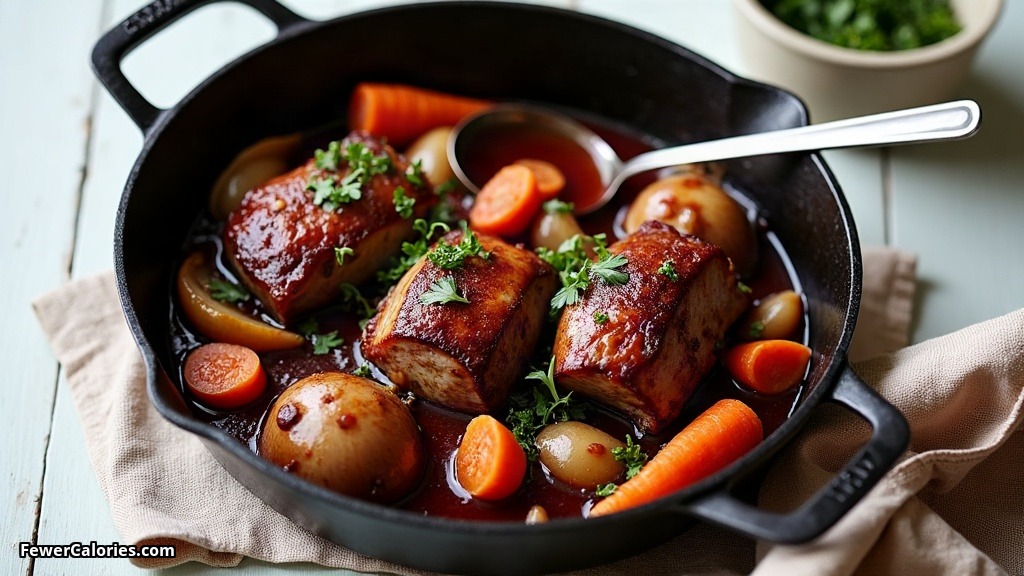
A slow-braised duck casserole at approximately 275 calories per serving. Skinless, deeply savory, and full of vegetables.
Duck has a reputation for being rich, and with the skin on it earns it. Take the skin off, brown the joints properly, and braise them slowly in red wine with thyme and bay, and what you get instead is deep, gamey flavor with very little fat. Doubling the mushrooms, carrots, and baby onions turns this into a dish that comfortably serves six at around 275 calories and 6 WW Classic Points, down from 440 and 8.
Recipe Info
Serves: 6 | Prep Time: 20 minutes | Cook Time: 1 hour 15 minutes | Calories per serving: ~275
Nutrition per Serving (Estimated)
Protein: 31g | Fat: 8g | Carbohydrates: 9g | Fiber: 2.5g
WW Classic Points: Approximately 6 points per serving (estimated from the original 8 point recipe). Two changes account for this: olive oil replaces the butter or rendered duck fat, and the vegetable content has been roughly doubled, which means the same duck now stretches to six servings rather than four. Note: This estimate is based on the legacy WW points system and is provided as a general reference only.
Ingredients
- 1 tablespoon olive oil
- 1 duck, 2.2 to 2.6kg / 5lb to 5lb 12oz, skin removed and jointed into 8 pieces
- 4 garlic cloves, peeled and finely chopped
- 400ml / 14fl oz dry red wine
- 200g / 7oz mushrooms, thinly sliced
- 2 sprigs parsley, chopped
- 2 small bay leaves
- 1 teaspoon fresh thyme, or 1/4 teaspoon dried
- 1 teaspoon salt
- Freshly ground black pepper, to taste
- 12 small pickling onions or shallots, peeled
- 4 carrots, peeled and quartered
Instructions
- Preheat the oven. Preheat to 180C (350F / Gas Mark 4).
- Brown the duck. Heat the olive oil in a large frying pan. Add the duck pieces and brown well over medium heat, working in batches so the pan is never crowded. Transfer to a casserole dish with a slotted spoon.
- Pour off the fat. Tip away the fat that has rendered out of the duck, leaving the browned bits behind in the pan. This is where most of the calorie saving happens.
- Cook the garlic. Return the pan to the heat, add the garlic, and cook for 1 minute until fragrant.
- Build the sauce. Add the red wine, mushrooms, parsley, bay leaves, thyme, salt, and pepper. Bring to the boil, stirring and scraping the base of the pan, and cook for 3 to 4 minutes until slightly reduced.
- Assemble. Add the pickling onions and carrots to the casserole dish with the duck, then pour the sauce over the top.
- Braise. Cover and bake for 1 hour 15 minutes, until the duck is tender and pulling away from the bone.
- Skim and serve. Let the dish stand for 10 minutes, then skim any fat from the surface with a spoon before serving.
Serving Suggestions
- Serve with celeriac mash or a small portion of new potatoes
- Steamed green beans or savoy cabbage on the side
- Braised red cabbage is a classic partner for duck
- Spoon over soft polenta to soak up the sauce
- A sharply dressed watercress salad cuts the richness well
Tips and Variations
- Removing the skin before browning is essential. Left on, it renders into the sauce and undoes the whole point of the dish
- Skimming after resting is much easier than skimming while hot, as the fat rises and firms slightly
- Make this a day ahead if you can. The fat sets on the surface overnight and lifts off in one piece
- Duck legs alone work well if you prefer dark meat, and need about the same braising time
- A strip of orange zest added with the wine is a traditional pairing
Why This Recipe Works
Almost all of the fat in a duck sits in and just under the skin, so removing it before cooking takes out the bulk of the calories while leaving the meat itself, which is lean and a good source of protein. Browning still happens perfectly well in a tablespoon of olive oil, and pouring off the rendered fat before building the sauce stops it going straight back in. The wine, thyme, bay, and garlic do all the seasoning work for nothing, and doubling the mushrooms, carrots, and onions means every plate arrives full without any more duck on it.
Storage and Reheating
Store cooled leftovers in an airtight container in the refrigerator for up to 3 days, following USDA guidance on leftovers. Reheat gently in a covered dish in a moderate oven until piping hot throughout. This casserole freezes well for up to 3 months and improves in flavor. Defrost fully in the refrigerator before reheating.
Disclaimer: Nutritional information is estimated and may vary based on specific ingredients, brands, and portion sizes used. This recipe is for informational purposes only and is not a substitute for professional dietary or medical advice. Always consult a healthcare provider or registered dietitian for guidance tailored to your individual needs.
© 2026 by Fewercalories.com, All rights reserved. No part of this document may be reproduced, transmitted, copied, or distributed in any form or by any means, whether electronic, mechanical, photocopying, recording, or otherwise, without the prior written permission of the copyright holder.