
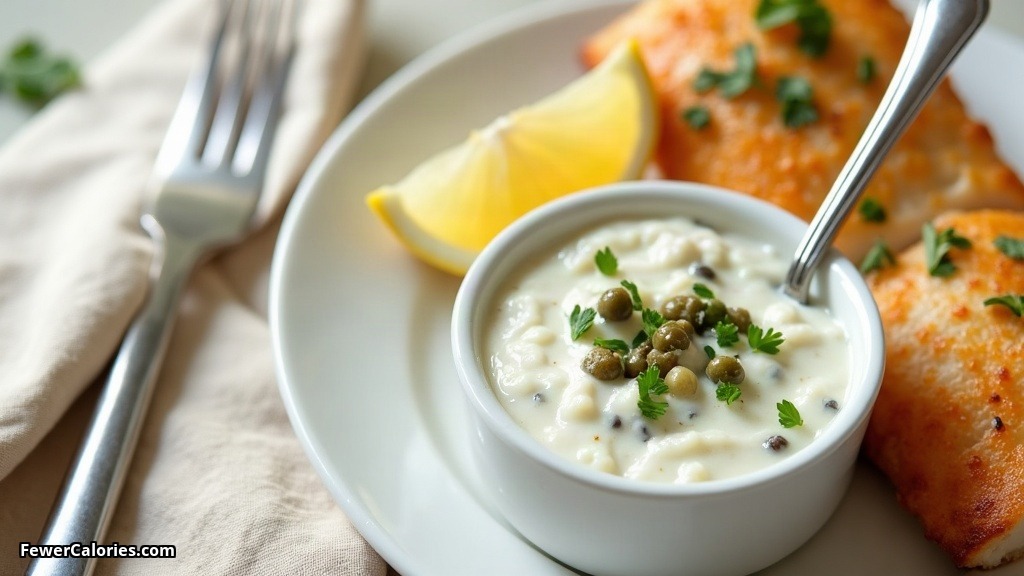
The classic fish-supper sauce at approximately 45 calories per serving. Sharp, herby, and thick enough to hold its shape on the spoon.
Tartare sauce lives or dies on the bits suspended in it, the capers, the cornichons, the parsley, and none of those cost anything worth counting. Swapping part of the mayonnaise for thick Greek yogurt keeps the sauce every bit as creamy while dropping it to around 45 calories and 1 WW Classic Point per serving. It takes about five minutes and tastes considerably better than anything from a jar.
Recipe Info
Serves: 7 | Prep Time: 5 minutes | Chill Time: 30 minutes | Calories per serving: ~45
Nutrition per Serving (Estimated)
Protein: 1.5g | Fat: 4g | Carbohydrates: 1.5g | Fiber: 0g
WW Classic Points: Approximately 1 point per serving (estimated from the original 3 point recipe, updated to reflect light mayonnaise cut with thick Greek yogurt). Note: This estimate is based on the legacy WW points system and is provided as a general reference only.
Ingredients
- 100ml / 3.5fl oz light mayonnaise
- 60ml / 2fl oz plain 0% fat Greek yogurt
- 1 tablespoon tarragon vinegar
- 1 teaspoon finely chopped onion or shallot
- 1 teaspoon capers, drained and finely chopped
- 1 teaspoon finely chopped cornichons
- 1 teaspoon finely chopped green olives
- 1 teaspoon finely chopped flat-leaf parsley
- Freshly ground black pepper, to taste
Instructions
- Whisk the base. Combine the light mayonnaise and Greek yogurt in a small bowl and whisk until completely smooth.
- Sharpen it. Whisk in the tarragon vinegar. The sauce will loosen slightly and take on a clean, sharp edge.
- Fold in the texture. Stir through the onion, capers, cornichons, olives, and parsley. Chop everything finely so no single piece dominates a spoonful.
- Season and chill. Season with black pepper, cover, and refrigerate for at least 30 minutes so the flavors settle and the sauce firms up.
Serving Suggestions
- Serve with baked or grilled white fish such as cod, haddock, or pollock
- Spoon alongside oven-baked fries for a lighter take on fish and chips
- Use as a dip for crisp raw vegetables
- Spread thinly in a salmon or crab sandwich
- Serve with fish cakes or grilled prawn skewers
Tips and Variations
- Use thick, strained Greek yogurt rather than a runny natural yogurt, or the sauce will not hold its shape
- Chopping the capers rather than leaving them whole spreads their flavor through every bite
- Fresh dill or tarragon in place of the parsley suits salmon particularly well
- A squeeze of lemon juice can stand in for the tarragon vinegar
- Let the sauce sit for a few minutes at room temperature before serving so the flavors open up
Why This Recipe Works
All the character in a tartare sauce comes from the sharp, salty additions rather than from the mayonnaise, which is really just the vehicle. Replacing over a third of that mayonnaise with thick Greek yogurt keeps the body and adds a gentle tang that suits fish beautifully, while the capers, cornichons, and vinegar make sure nothing tastes diluted. The result is a sauce you can be generous with rather than one you have to ration.
Storage and Reheating
Store in a covered jar in the refrigerator for up to 5 days, in line with USDA guidance on refrigerating prepared foods. Because this version contains yogurt it will not keep for weeks the way an all-mayonnaise sauce does. Stir before serving if any liquid separates out. This sauce is served cold and should not be reheated or frozen.
Disclaimer: Nutritional information is estimated and may vary based on specific ingredients, brands, and portion sizes used. This recipe is for informational purposes only and is not a substitute for professional dietary or medical advice. Always consult a healthcare provider or registered dietitian for guidance tailored to your individual needs.
© 2026 by Fewercalories.com, All rights reserved. No part of this document may be reproduced, transmitted, copied, or distributed in any form or by any means, whether electronic, mechanical, photocopying, recording, or otherwise, without the prior written permission of the copyright holder.